Jewelry Box Theory: The 5 Pieces Every Power Dresser Needs
There is a language spoken in rooms where decisions are made, and it is not verbal. It is communicated through the glint of a diamond at the earlobe when a woman turns her head toward a voice. Through the quiet weight of gold resting against a collarbone as she leans forward to make a point. Through the flash at her wrist when she reaches for a glass of water during a negotiation that has reached its critical moment. This language is older than the corporate boardroom, older than the concept of the power suit, older than the idea of women in professional life altogether. It is the language of fine jewelry, and the women who speak it fluently understand something that the women who ignore it do not: the right pieces, worn daily and worn with intention, communicate authority more effectively than any blazer, any title, any business card ever could.
This is Jewelry Box Theory. It holds that a woman’s professional presence is built not on the clothes she wears — which change daily, which follow trends, which are subject to the whims of an industry that profits from making last season’s silhouette obsolete — but on the five pieces of fine jewelry she wears every single day, without fail, until they become as natural on her body as her own posture. These five pieces constitute a uniform. They are infrastructure. They are the foundation upon which everything else is accessorized. And in 2026, as dress codes continue their dissolution into something more fluid and more personal, the woman who has built her jewelry box according to this theory walks into every room with an advantage that cannot be purchased off the rack.
The five pieces are not arbitrary. They have been selected according to a rigorous set of criteria that prioritizes versatility, durability, and material integrity over trend, brand recognition, or seasonal relevance. Each piece must be suitable for continuous daily wear, meaning it must be comfortable enough to sleep in, durable enough to shower in, and refined enough to wear to a formal event without appearing inadequate. Each piece must be constructed from materials that hold their value independently of the brand name — solid gold, platinum, natural diamonds of gemological quality. And each piece must work in concert with the other four, creating a cohesive visual signature that reads as intentional rather than decorative.
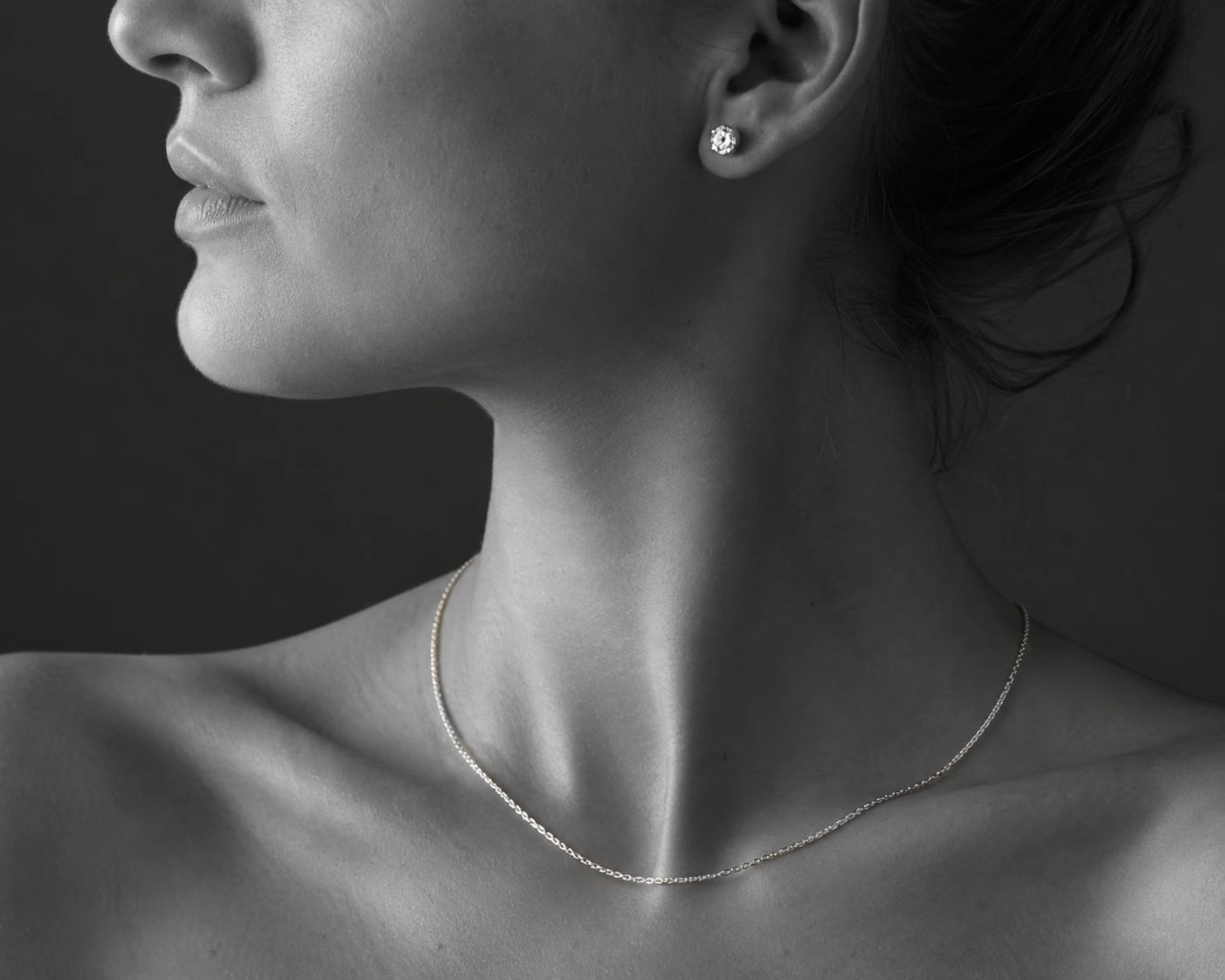
The first piece, and the foundation of the entire theory, is the gold chain necklace. Fourteen karat or eighteen karat, eighteen to twenty inches in length, in a classic link style — cable, curb, or box. No pendant. No ornamentation. No charm that will date itself to a specific moment or trend. Just precious metal, finely wrought, lying against the skin from the moment it is put on until the moment the wearer decides to remove it, which for most adherents to the theory is approximately never. The gold chain is the most intimate piece in the jewelry box. It absorbs the warmth of the body. It registers the pulse at the throat. It catches light when the wearer speaks, drawing the eye of the listener to her face, to her words, to her presence. It is the piece that a child remembers when remembering her mother, the glint of gold that meant comfort, safety, authority. A chain of this quality costs between eight hundred and twelve hundred dollars at a trusted luxury reseller where the retail markup has been removed. Amortized over a lifetime of continuous wear, its cost per day is incalculably small.
The second piece addresses the ears, and here the theory prescribes the diamond stud. Not the oversized cocktail stud that reads as evening-only. Not the tiny chip that reads as uncertain. The ideal daily-wear diamond stud is between half a carat and one carat per ear, set in platinum or white gold in a simple four-prong or six-prong basket setting that allows maximum light to enter the stone. The diamond should be of sufficient quality that it sparkles under the harsh fluorescent light of a conference room, not merely under the flattering glow of a restaurant chandelier. G color or better. VS clarity or better. Ideal cut. These specifications are not elitism. They are engineering requirements. A diamond that meets these standards will perform its primary function — catching and returning light — in any environment, under any conditions, for the entire lifetime of the wearer. A pair of studs meeting these specifications costs approximately fifteen hundred to twenty-five hundred dollars at a trusted reseller. At traditional retail, the same stones command twice that amount.
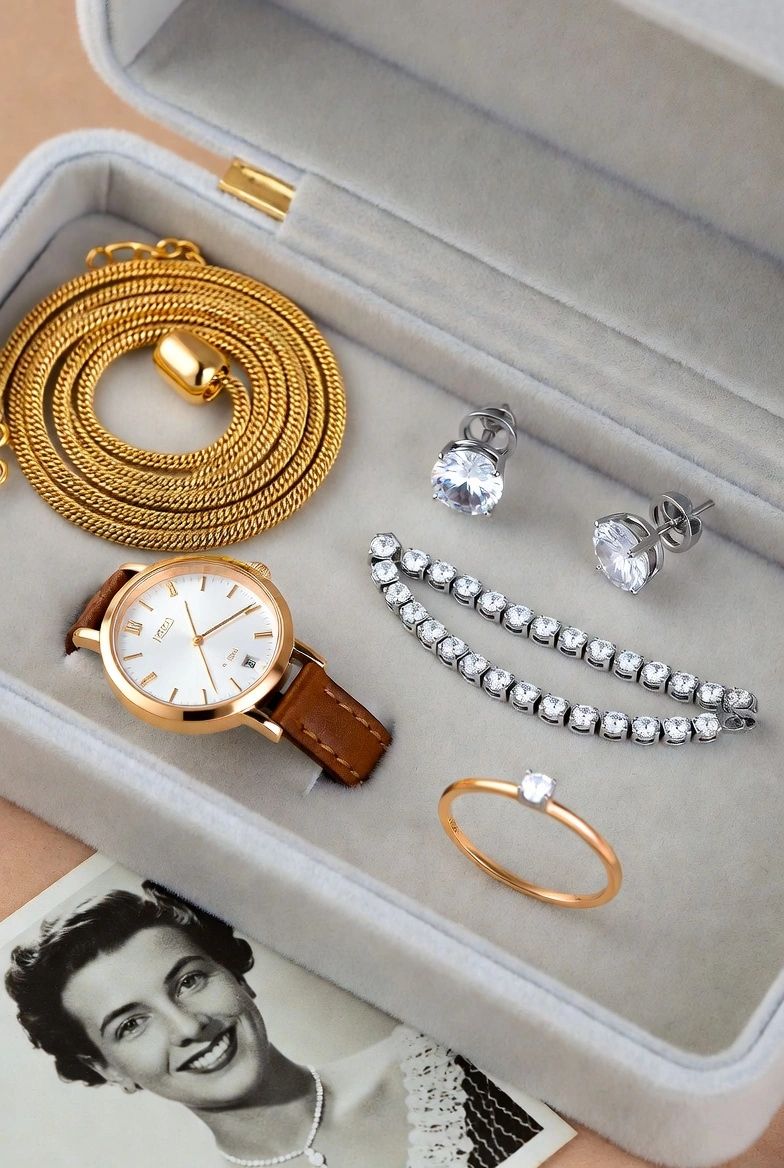
The third piece is the diamond tennis bracelet, and it represents both the emotional apex and the financial anchor of the theory. Five carats total weight, F-G color, VS clarity, set in platinum or eighteen-karat white gold. The tennis bracelet is the piece most strongly associated with significant life events — the promotion, the milestone anniversary, the achievement that words alone cannot adequately commemorate. But in Jewelry Box Theory, the tennis bracelet is not a gift received. It is a self-purchase, acquired as the final component of the daily-wear uniform. The woman who buys herself a tennis bracelet is not waiting for someone else to determine that she deserves it. She has made that determination herself, and the bracelet on her wrist is the tangible evidence of that decision.
The tennis bracelet is also the most significant store of value in the jewelry box. Gold and platinum are commodities with established global markets. High-quality natural diamonds in the one-carat-and-above range have appreciated steadily over the past two decades, driven by supply constraints at major mines and sustained demand from emerging markets. A tennis bracelet purchased at fair market value — the value of the metal plus the wholesale value of the stones plus a reasonable margin for craftsmanship — will hold that value over time. At a trusted luxury reseller, a bracelet meeting these specifications can be acquired for approximately twenty-five hundred to thirty-five hundred dollars. At traditional retail, the same bracelet would command eight to twelve thousand. The differential is not a reflection of quality. It is a reflection of the Fifth Avenue markup, the Madison Avenue marketing budget, and the cost of the champagne served while you browse.
The fourth piece is the watch. Analog. Mechanical if possible. Sized appropriately to the wrist — which means, for most women, a case diameter of twenty-eight to thirty-six millimeters, not the oversized men’s watches that had a moment a decade ago and now read as costume. The watch should be legible at a glance, uncluttered in its design, and constructed from materials that will age gracefully. A Cartier Tank. A Jaeger-LeCoultre Reverso. A pre-owned Rolex Datejust in steel and gold. The watch communicates something that the other pieces do not: a relationship with time. The woman who wears a serious watch is signaling that she respects time as a resource, that she is punctual without being anxious, that she moves through her day with intention rather than reactivity. The watch is the most professional piece in the jewelry box, and it anchors the entire composition in a way that prevents the other pieces from reading as merely decorative.
The fifth and final piece is the ring. This is the most personal element of the theory, and it resists standardization in a way that the other four pieces do not. For some women, it is an engagement ring — a diamond solitaire of a carat or more, set in platinum, chosen by a partner who understood the assignment. For others, it is a self-purchased signet ring, or a family heirloom passed down through generations, or a simple gold band that signifies a commitment to oneself. The ring matters not because of its specific design but because of its position on the hand. A woman’s hands are among the most visible parts of her body. They gesture when she speaks. They hold pens and phones and wine glasses and steering wheels. They are constantly in motion, constantly observed. The ring on her finger is the period at the end of the sentence her appearance is writing. It should be deliberate.
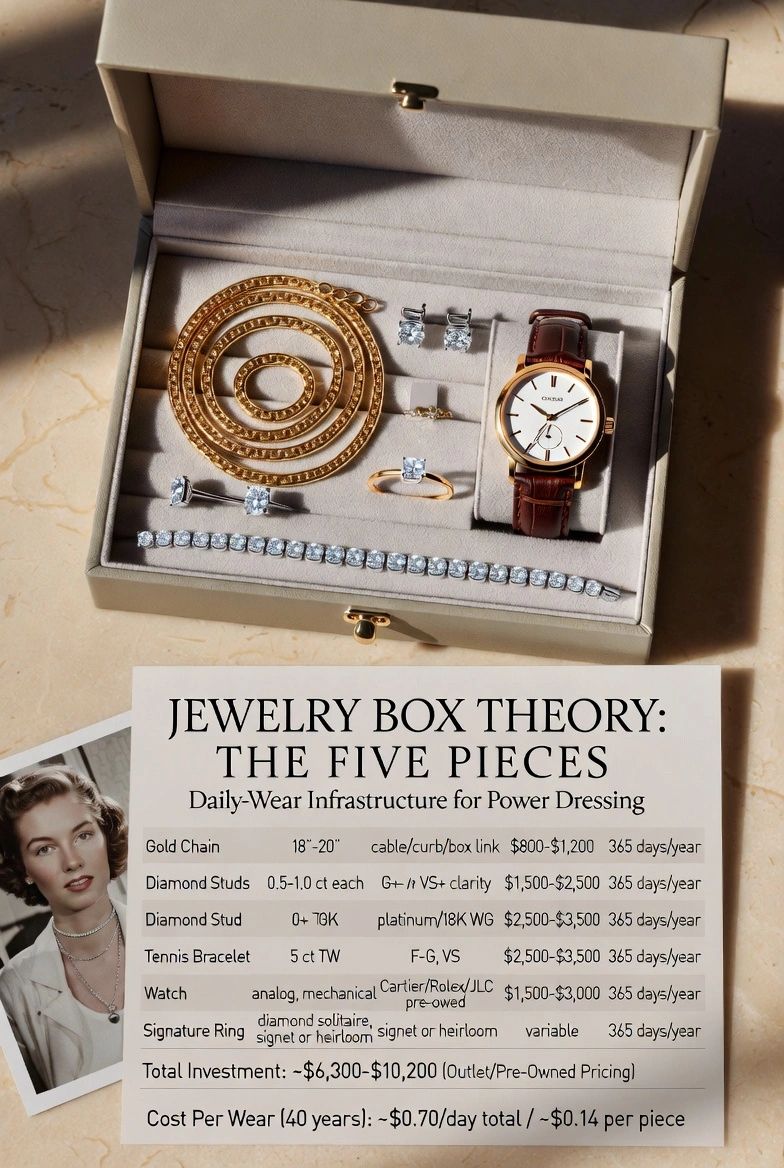
The cost-per-wear analysis of the five pieces is where the theory transitions from aesthetic philosophy to financial argument. The total investment, assuming pre-owned or reseller pricing for all five pieces, ranges from approximately six thousand to ten thousand dollars. This is a significant sum, and the theory does not pretend otherwise. But the theory asks the reader to consider what she is already spending on jewelry over a lifetime — the impulse purchases at airport boutiques, the trendy pieces that tarnish after six months, the statement necklaces bought for specific dresses for specific weddings and never worn again. The aggregate cost of these disposable acquisitions, over forty years, far exceeds ten thousand dollars. The aggregate value, at resale, is near zero. The five pieces of Jewelry Box Theory, by contrast, will still be worth approximately what was paid for them in forty years, because gold is gold and diamonds are diamonds and the market for both is global and liquid.
The psychological dimension of the theory is more difficult to quantify but arguably more important. A woman who wears the same five pieces every day stops thinking about what to wear. The decision is made. The uniform is in place. The cognitive load of accessorizing — the morning deliberation over which earrings coordinate with which necklace, the evening assessment of whether the bracelet is too formal for the occasion — is eliminated. The jewelry becomes part of the body, as unthinking as the act of putting on a watch, which for most people is not a decision but a reflex. This cognitive liberation frees the wearer to focus on matters more significant than ornamentation. The jewelry is present, it is beautiful, it is communicating the signals it was designed to communicate, but the wearer is not distracted by it. She has integrated it into her sense of self, and she moves through the world as though she has always worn these pieces and always will.

The intergenerational dimension of the theory is not an afterthought. It is central to the concept. The five pieces are selected not merely to last the lifetime of the original wearer but to be passed to the next wearer intact, retaining both their material value and their emotional significance. The gold chain that a woman wears every day for forty years, through promotions and childbirth and loss and triumph, absorbs the moments of her life without comment. When her daughter fastens that chain around her own neck for the first time, she is not putting on a piece of jewelry. She is putting on a record of a life, encoded in precious metal, transmitted across generations without a word being spoken. This is the definition of an heirloom. It is not something purchased with the intention of passing it down. It is something worn with such consistency and such meaning that passing it down becomes the only logical conclusion of its story.
The sourcing of the five pieces requires a level of diligence that traditional retail does not demand but that the informed consumer will embrace. A trusted luxury reseller that has been authenticating fine jewelry for over a decade, that employs X-ray fluorescence spectroscopy to verify metal purity, that uses thermal conductivity testing and spectroscopic analysis to confirm diamond authenticity, that sources from estate liquidations and trade-ins and overstock channels — this is not a retailer in the conventional sense. It is a filter. It removes the pieces that do not meet the standard. It verifies the pieces that do. It prices the pieces according to their material value rather than their brand markup. And it guarantees, with its reputation and its longevity, that what the client receives is precisely what was described.
The woman who builds her jewelry box according to this theory will discover, over time, that the pieces become inseparable from her identity. Colleagues will recognize the glint of her diamond studs before they recognize her face. Her children will associate the flash of her tennis bracelet with comfort, with authority, with the particular quality of attention that only a mother can give. The pieces will be present in photographs taken at moments she cannot anticipate — the candid shot at the holiday party, the professional headshot that circulates with the press release, the family portrait that hangs on the wall for decades. They will be the constants in a life of variables, the unchanging elements in a visual identity that evolves around them while they remain exactly as they were the day they were acquired.
This is Jewelry Box Theory. It is not a shopping list. It is not a trend report. It is a philosophy of adornment that treats jewelry as infrastructure rather than decoration, as capital rather than consumption, as legacy rather than impulse. The five pieces are the beginning of a conversation that continues across generations. The gold chain. The diamond studs. The tennis bracelet. The watch. The ring. Five pieces, worn daily, amortized to pennies per day, holding their value into the next generation. Everything else is just shopping.
Complimentary shipping is provided on all orders within the United States. Our client services team is available to address inquiries regarding specific pieces, authentication protocols, or the acquisition process. For clients who wish to begin building their jewelry box according to the principles outlined above, a code is available. The code is n8r7by. It provides fifteen percent off any acquisition. We look forward to serving you.